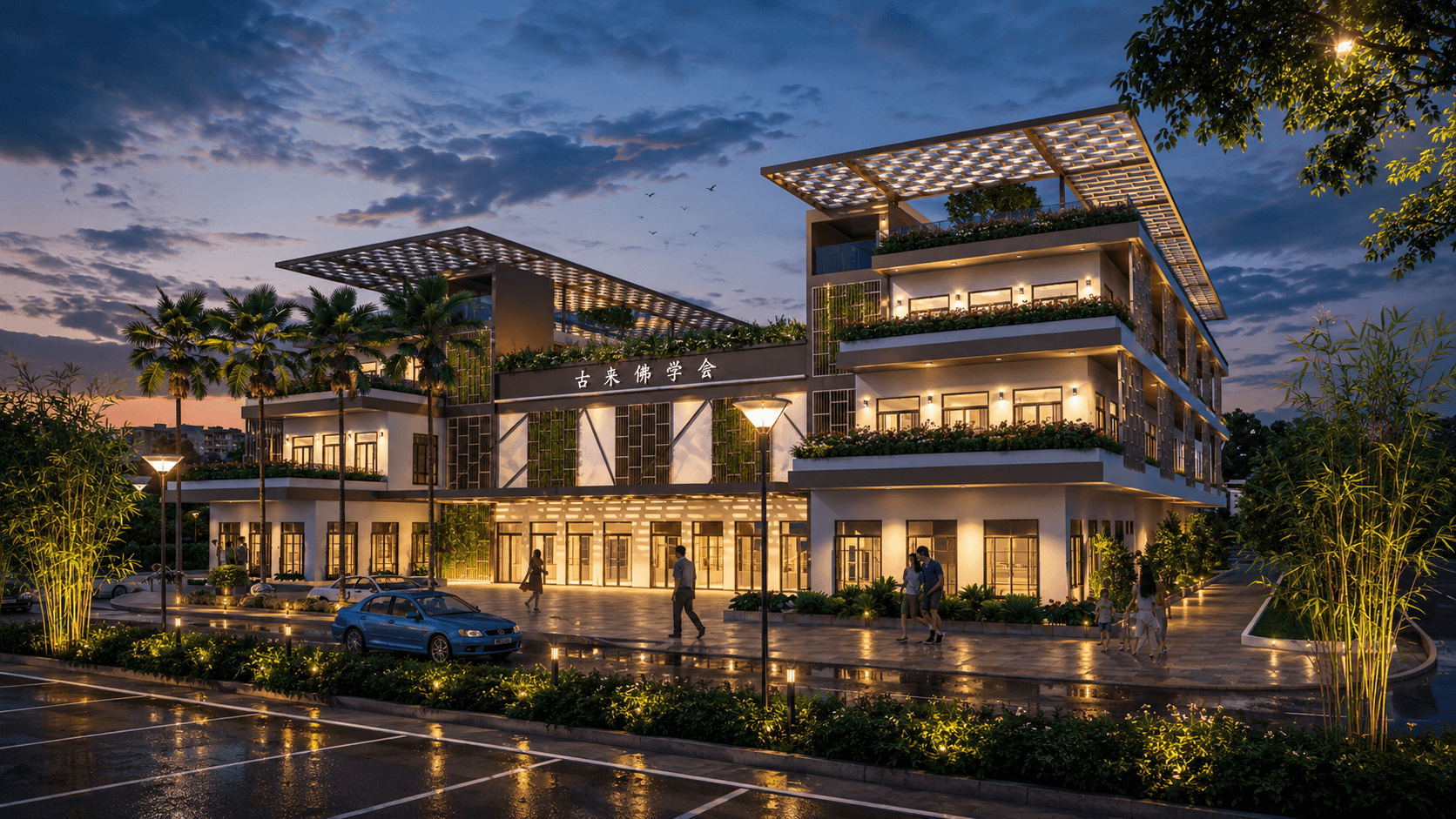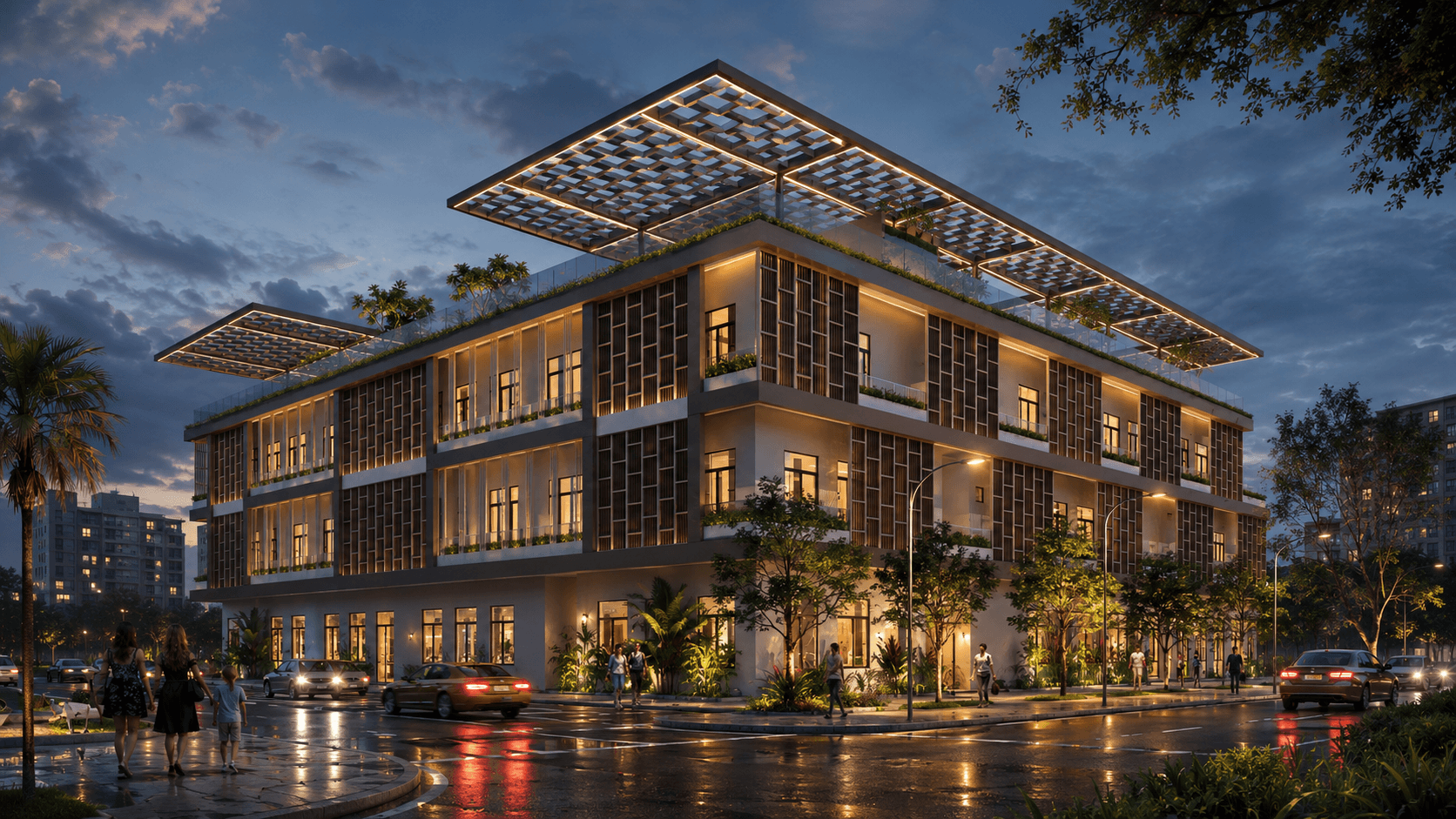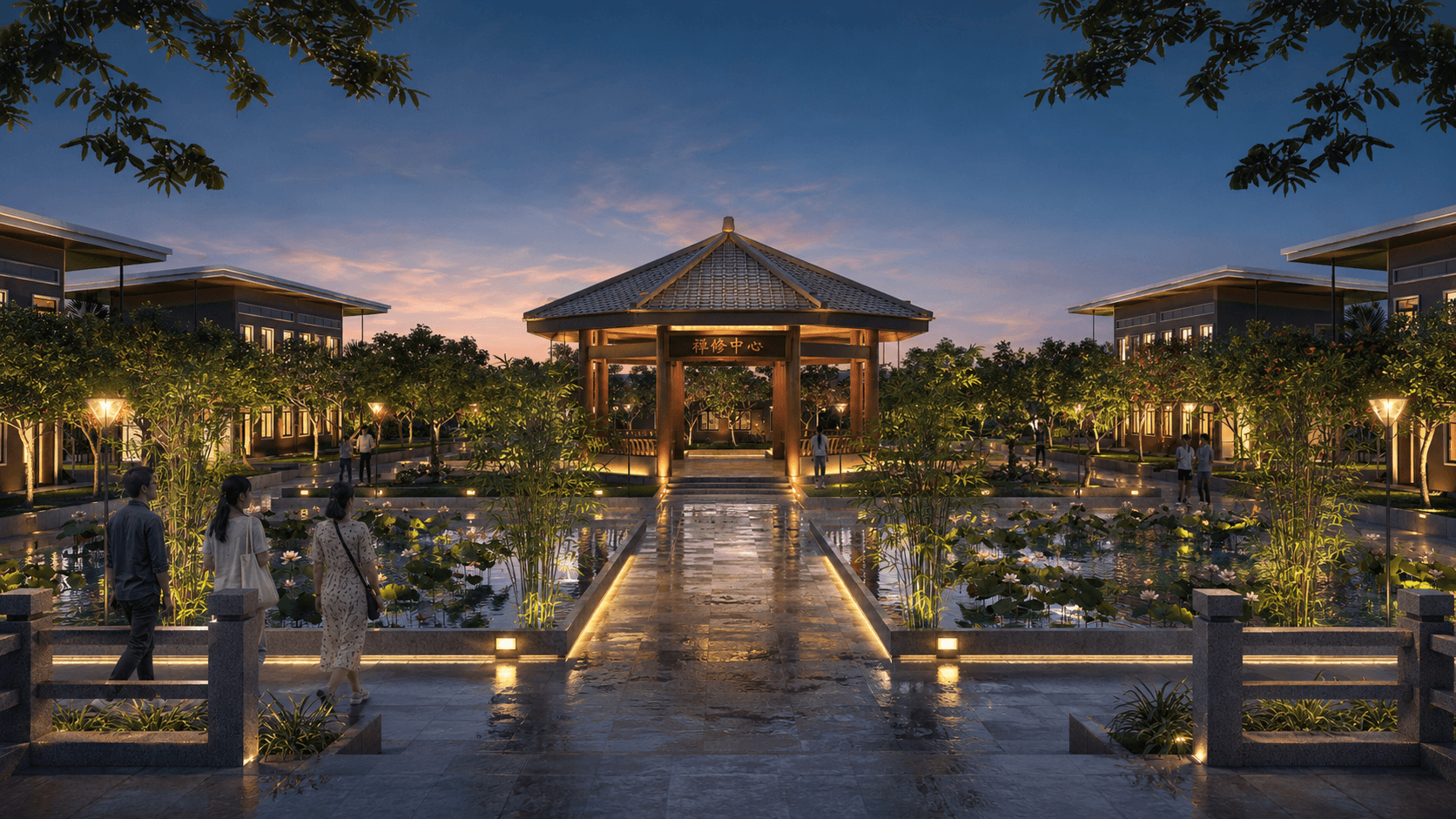
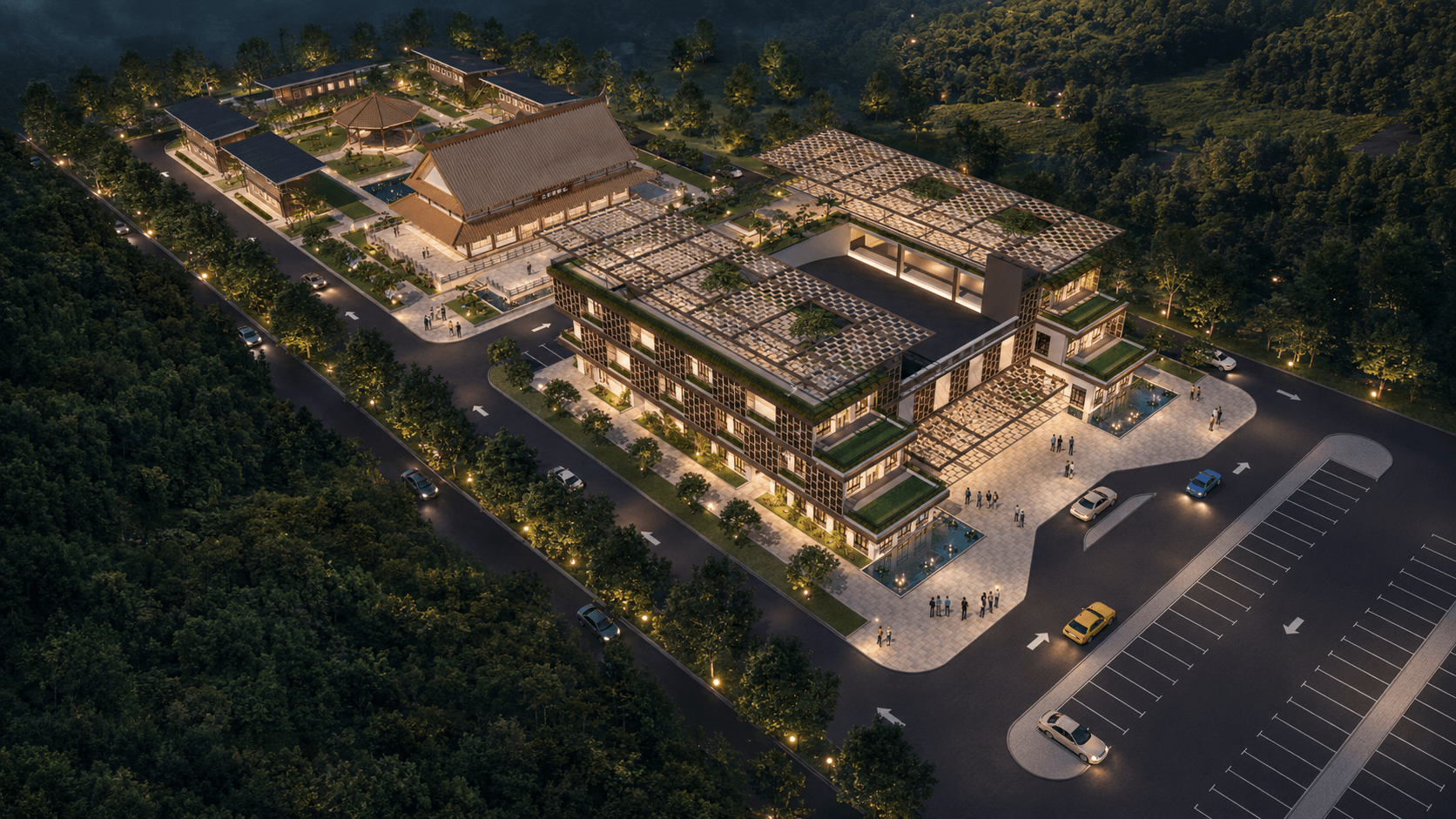
The Buddhist Cultural Centre is envisioned as a community-focused charitable project dedicated to supporting the Buddhist society of Kulai. Conceived as a place for cultural exchange, meditation, learning and recreation, the development brings together a range of spiritual and communal activities within a calm and inclusive setting. Its architecture seeks to introduce a renewed sense of identity and vitality to the local Buddhist community while remaining respectful of the values and traditions it represents.
The design draws inspiration from traditional Chinese temple architecture, reinterpreted through a contemporary and environmentally responsive language. A broad, seemingly floating roof forms the defining architectural gesture, creating a sheltered and welcoming threshold into the complex. Carefully proportioned volumes, repetitive louvre patterns and a restrained palette of light, natural tones give the building a serene character while translating familiar temple elements into a more modern expression.
Landscape is treated as an integral part of the spiritual experience rather than as a secondary element. Gardens, shaded walkways and lotus ponds are distributed throughout the centre to strengthen the relationship between architecture, nature and contemplation. These landscaped spaces create moments of pause and reflection, while the ponds support natural cross-ventilation and contribute to a cooler, more tranquil microclimate. The green roof further enhances thermal comfort by reducing solar heat gain and introducing greenery above the occupied spaces.
Through the integration of cultural symbolism, contemporary design and sustainable strategies, the Buddhist Cultural Centre creates an environment that is both functional and spiritually uplifting. The project balances tradition with innovation, providing a peaceful sanctuary for worship, meditation and community gathering. More than a cultural facility, it is conceived as a lasting place of connection, reflection and renewal for the Buddhist community in Kulai.