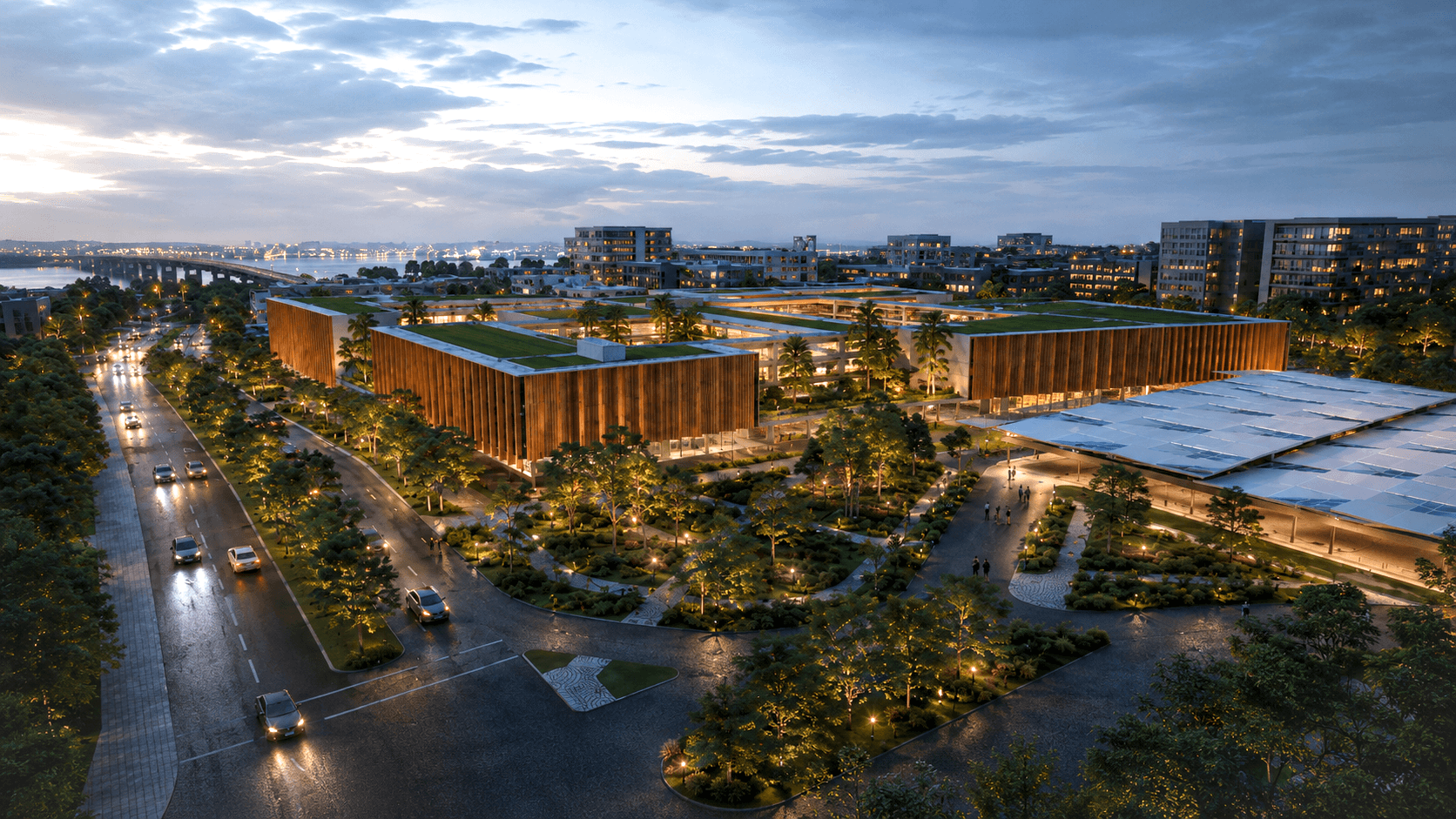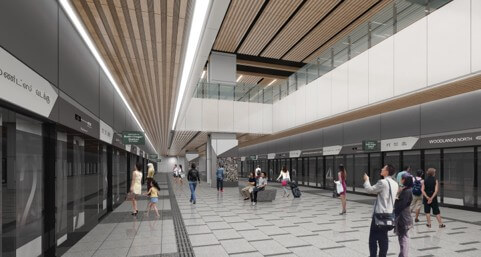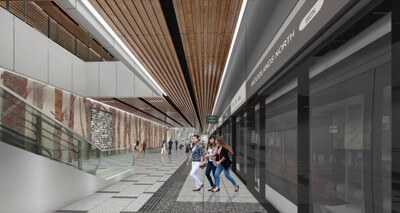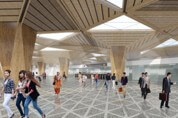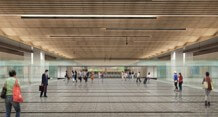
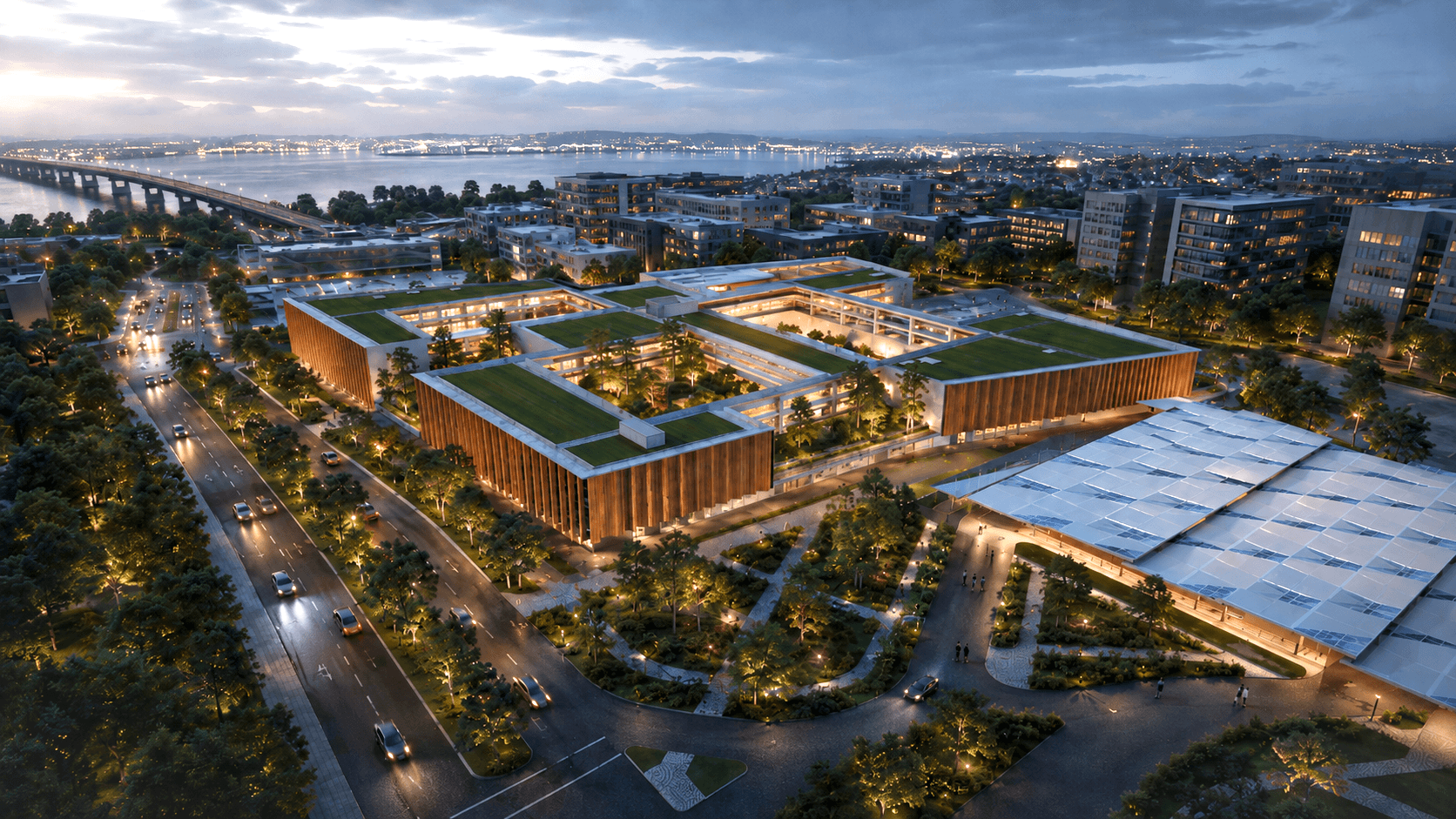
The Woodlands North RTS Checkpoint is conceived as a contemporary civic gateway that brings together border control, passenger movement and public infrastructure within a calm, highly legible architectural composition. Rather than expressing the complex as a single institutional mass, the development is arranged as a series of interconnected low-rise blocks organised around landscaped courtyards and internal circulation spines. This layered planning reduces the perceived scale of the facility while supporting clear operational zoning, efficient passenger flow and intuitive movement between arrival, processing and departure areas.
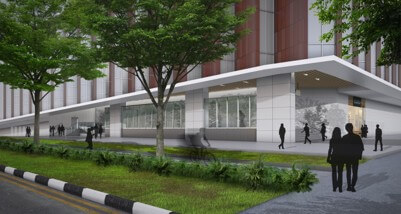
The architecture is defined by strong horizontal proportions, deep overhangs and a restrained interplay of solid and transparent elements. Broad roof planes visually unify the various building components, while open courtyards introduce daylight, greenery and visual relief into the centre of the complex. The main façades are articulated with vertical timber-toned fins, creating warmth and rhythm along the building perimeter while providing a distinctive identity appropriate for a major cross-border transport gateway.
A refined palette of warm timber, off-white concrete, glass and dark metal gives the checkpoint a dignified yet welcoming character. Glazed elevations reveal selected public-facing spaces and create a sense of openness, while more solid façades provide the privacy and security required for controlled operational areas. Green roofs soften the building profile when viewed from above, allowing the architecture to sit more comfortably within its surrounding landscape and reinforcing the project’s low-rise, campus-like expression.
Landscape is treated as an integral part of the arrival experience, with tree-lined roads, planted forecourts and sheltered pedestrian routes creating a gradual transition between the city and the checkpoint. A broad transport canopy defines the principal drop-off and pick-up zone, providing weather protection while establishing a clear point of arrival. Together, the architecture and landscape transform a highly technical border facility into a composed public environment—one that balances security, efficiency and infrastructure with civic presence, environmental sensitivity and a strong sense of place.